Ovation: Designing Identity & Trust for Web3
Overview
Product design and motion design for Ovation, crafting a Web3 identity platform that helps users express themselves beyond their wallets.
Services

My Role — Product designer
The Identity Gap in Web3
Before I ever opened Figma or sketched an onboarding flow, I spent time observing. The Web3 world was vibrant, multi-layered, and deeply expressive, but the tools for expression felt cold, purely transactional, and overwhelmingly technical. Wallets exposed every asset, but stripped away intention. Marketplaces displayed collections like listings, not personal archives. Social platforms let people talk about NFTs, but did not let them live inside them.
People were trying to express themselves using platforms that were never designed for selfhood, only for ownership.During early research, I saw collectors sharing screenshots of wallet pages, creators adding NFTs to Twitter banners, community members linking Etherscan profiles in their bios just to “show receipts.” Some people used Notion pages as makeshift galleries. Some literally screen-recorded scroll-throughs of their wallet on mobile. These expressions Ire sincere and emotional, but undeniably makeshift. It felt like watching artists try to paint with spreadsheets.The problem was not that people lacked a place to store their NFTs, the blockchain already handled that. The problem was that people lacked a place to tell their story.

Listening to the Community
To understand the depth of the problem, I reached out directly to NFT collectors, artists, Kansas City DAO members, and curators across Twitter and Discord. Many expressed the same frustration: they had identity, culture, and meaning in their digital assets, yet no platform allowed them to present it in a way that felt human. A collector mentioned.
During user interviews, we weren’t looking for usability frustrations, I was looking for emotional ruptures. The moments where people felt unseen, misrepresented, misunderstood. Because identity products must solve emotional problems, not functional ones.
Two moments stayed with me:
One collector told us, “My NFTs are part of who I am, but there’s nowhere I can show them without feeling like I’m bragging.”
Another user said, “People look at my wallet and think I’m speculating. They don’t see the story behind what I collect.”
These were not feature requests.
These were identity fractures.
We mapped emotional signals using affinity mapping to reveal deeper motivations behind the frustration:
People wanted to be seen, not shown.
They wanted meaning, not display.
They wanted recognition, not ranking.
They wanted choice, not exposure.
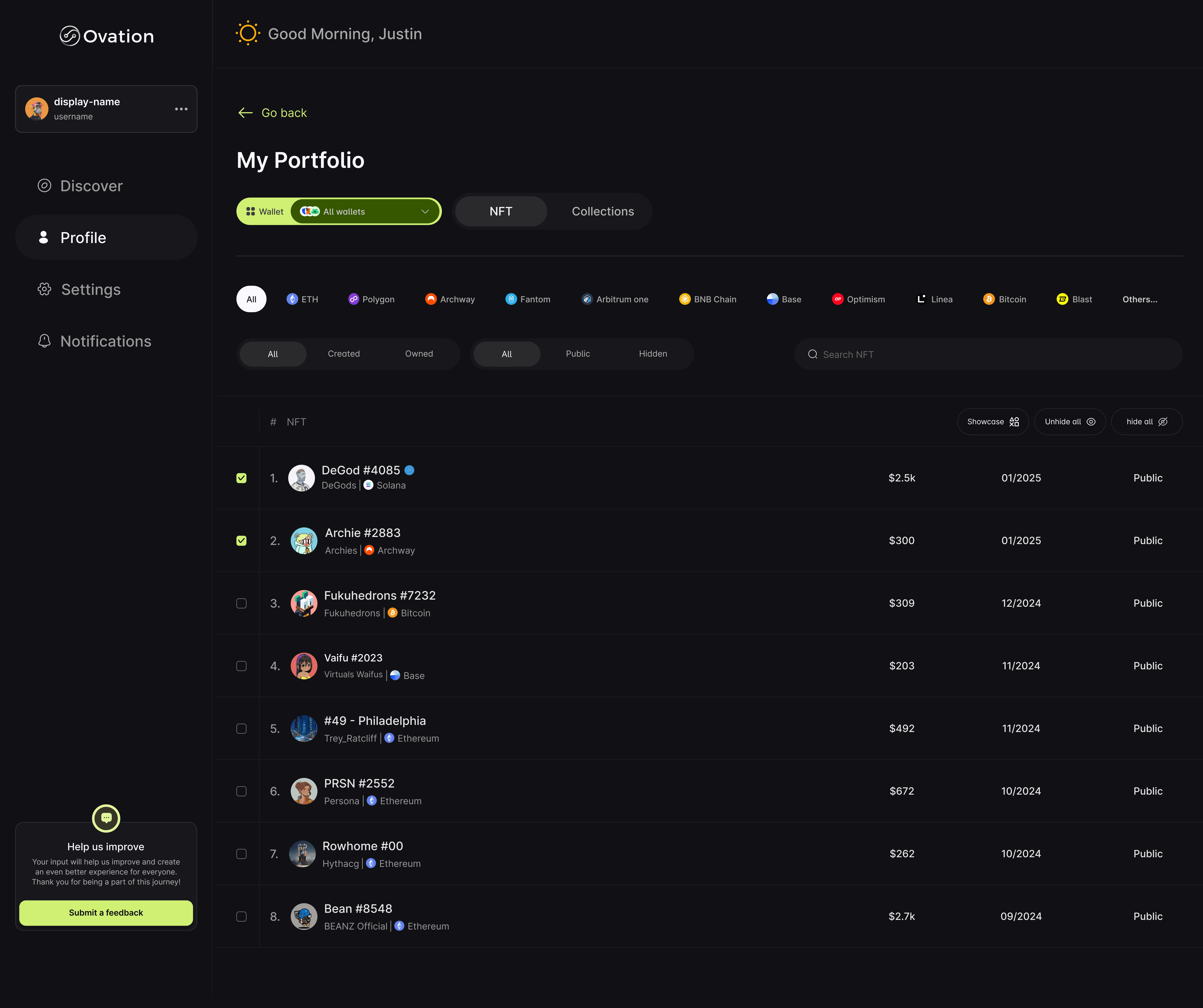
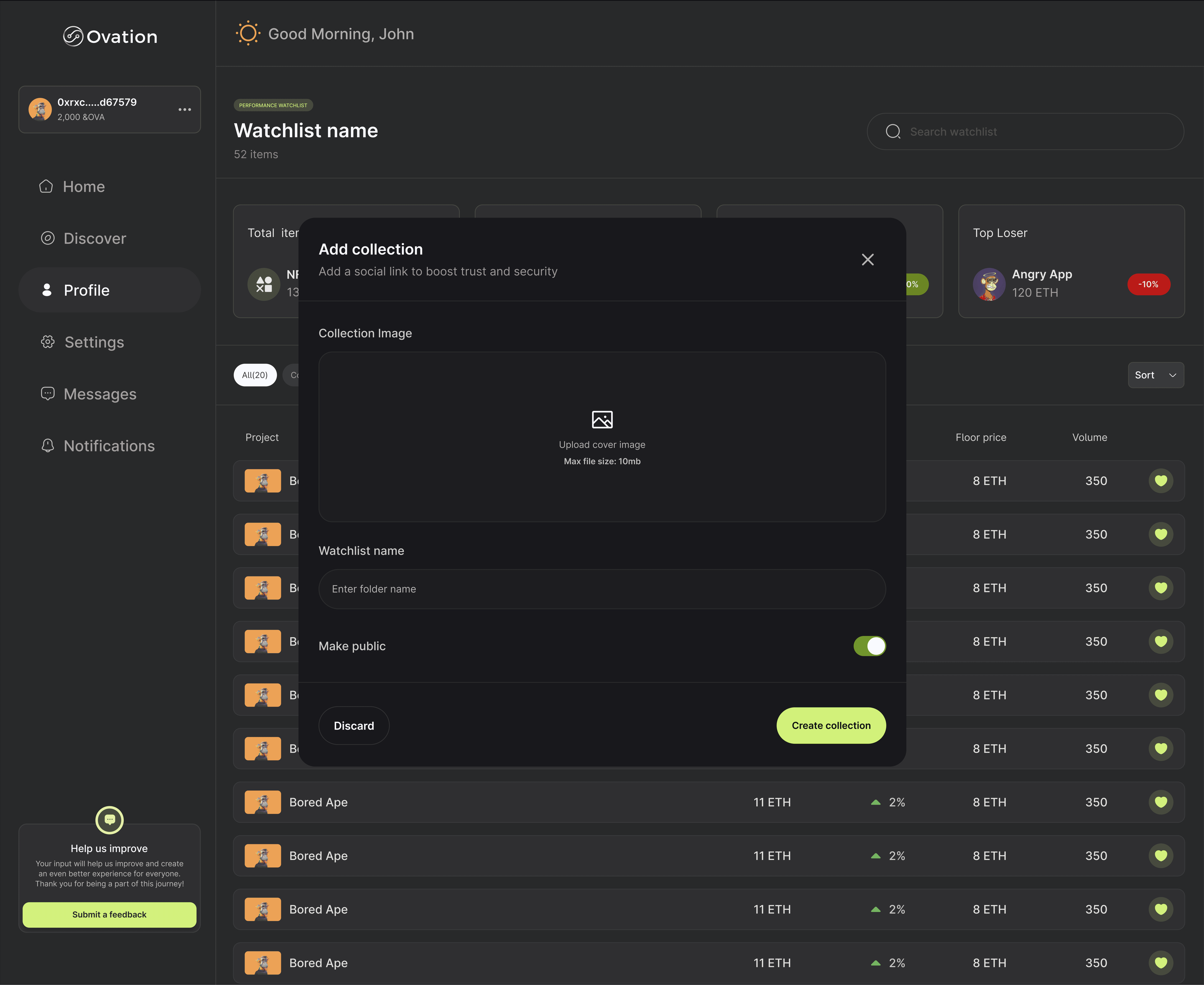
This realization shaped the foundation of the product: users must have complete control over which NFTs represent them. So users could highlight specific NFTs, hide others, reorder sections, pin external links, and present themselves as they define themselves. Visibility became intentional, not automatic.
Identity is not what you own.
Identity is what you choose to show, and how you choose to show it.

Shaping & Designing the Concept
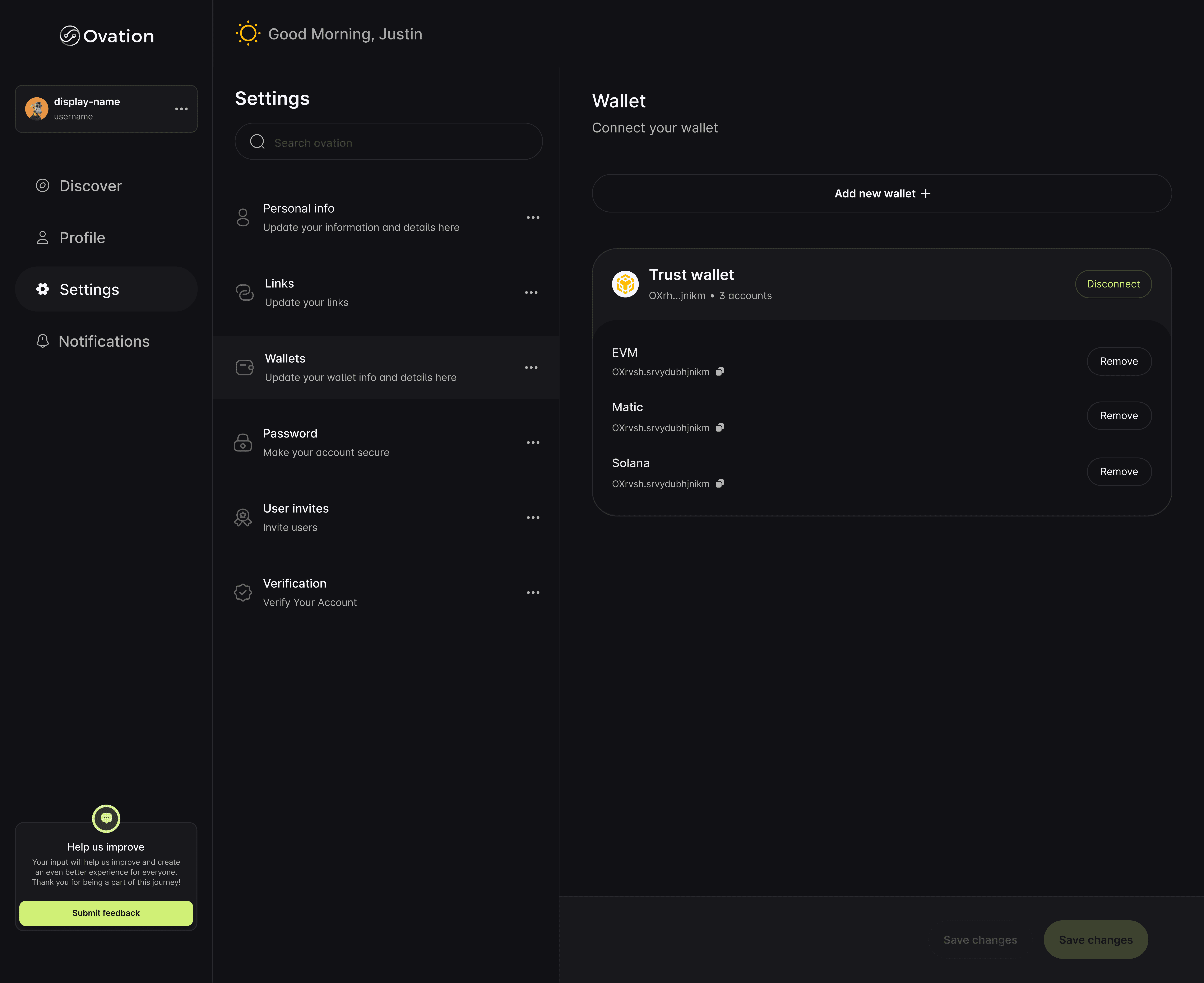
The idea for Ovation grew from these conversations. The platform would allow users to create a profile by first signing in with a familiar method, such as Twitter, reducing initial friction and building trust. Only after users understood the value of the platform would they be prompted to connect their wallet. Once connected, their NFTs across multiple chains would automatically populate into a single visual identity profile. It would feel personal, expressive, and easy to share, similar to Linktree, but rooted in ownership and authenticity.
This shift in onboarding order was one of the most important design decisions. It allowed the product to meet users where they were, rather than expecting them to be technically confident from the start.
The UI language needed to be deeply intentional, not futuristic, not corporate, not hyper-technical. Many Web3 products lean into neon, black glass, and cyber aesthetics that imply distance and cold futurism. Ovation needed to feel intimate, human, reflective. So I chose typography that gave identities clarity and voice, a dark palette that respects Web3 culture’s nighttime-native behavior patterns, and motion that guides the user rather than performs for them. Accessibility standards guided contrast and spacing. Interactions were softened to feel expressive rather than transactional.
I began sketching the user journey, identifying emotional peaks and friction points, curiosity, excitement, hesitation, validation. Wireframes established layout and flow, focusing on clarity, breathing room, and visual emphasis on assets rather than interface elements. Once the structure felt strong, I moved into high-fidelity design.
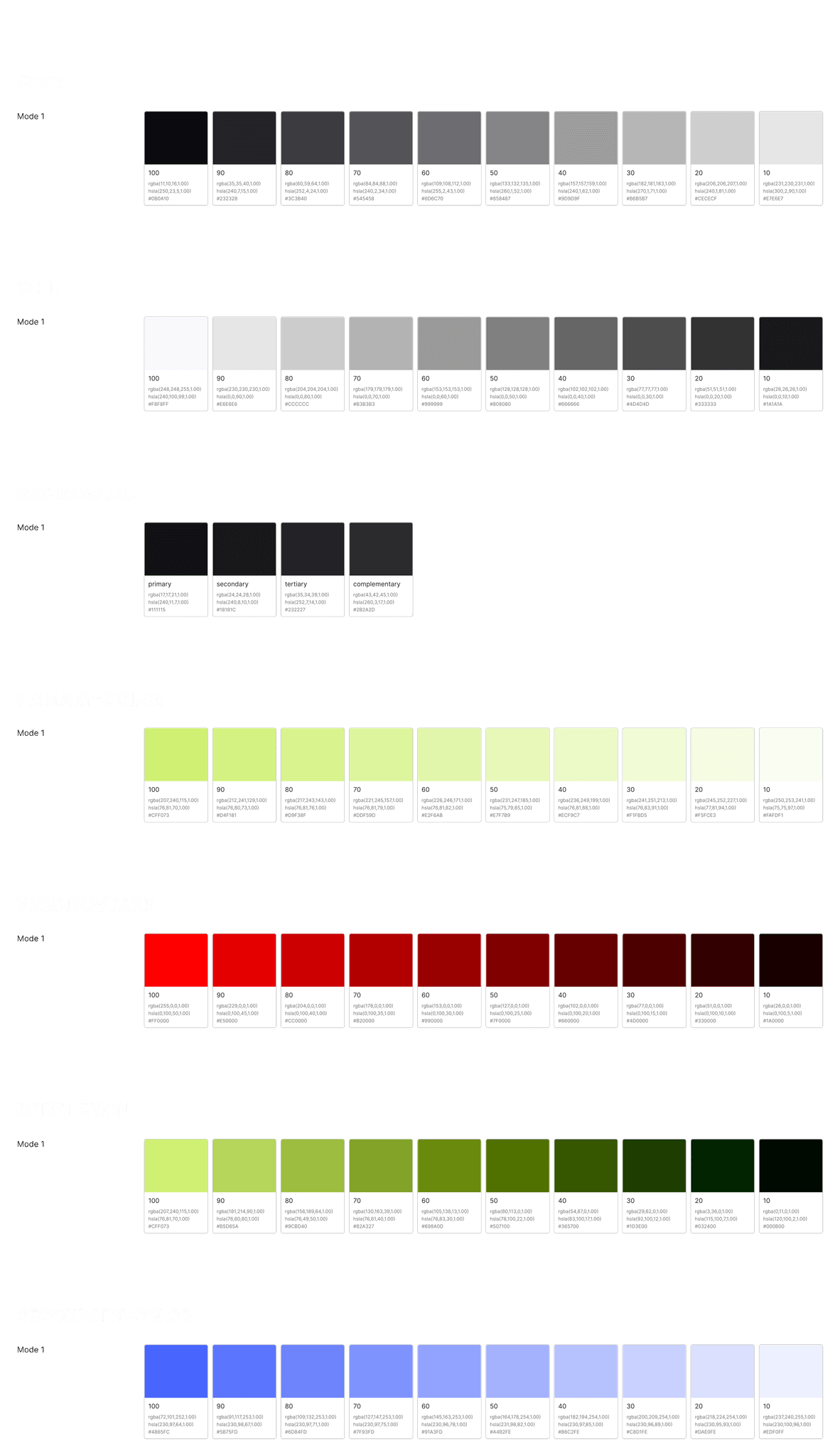
Color pallate
Gamification — Recognition as Belonging
We introduced badges not as rewards but as identity markers, symbols of participation, loyalty, cultural presence, artistic support, and collecting journey. This was not about competition. It was about belonging. A badge did not say you are better, it said you are part of something, and your presence is seen.

Stats — Understanding One’s Own Story
The stats page allowed users to view their collecting behavior as narrative patterns rather than financial metrics. It let them learn about themselves, not perform for others. This transformed collecting from accumulation into reflection.

Testing & Validation
As we tested prototypes with collectors, artists, and Web3 community members, we observed a crucial emotional response: people relaxed while personalizing. They smiled. They paused thoughtfully. They said things like, “Yes. This feels like me.” That was the real validation, not metrics, but alignment.
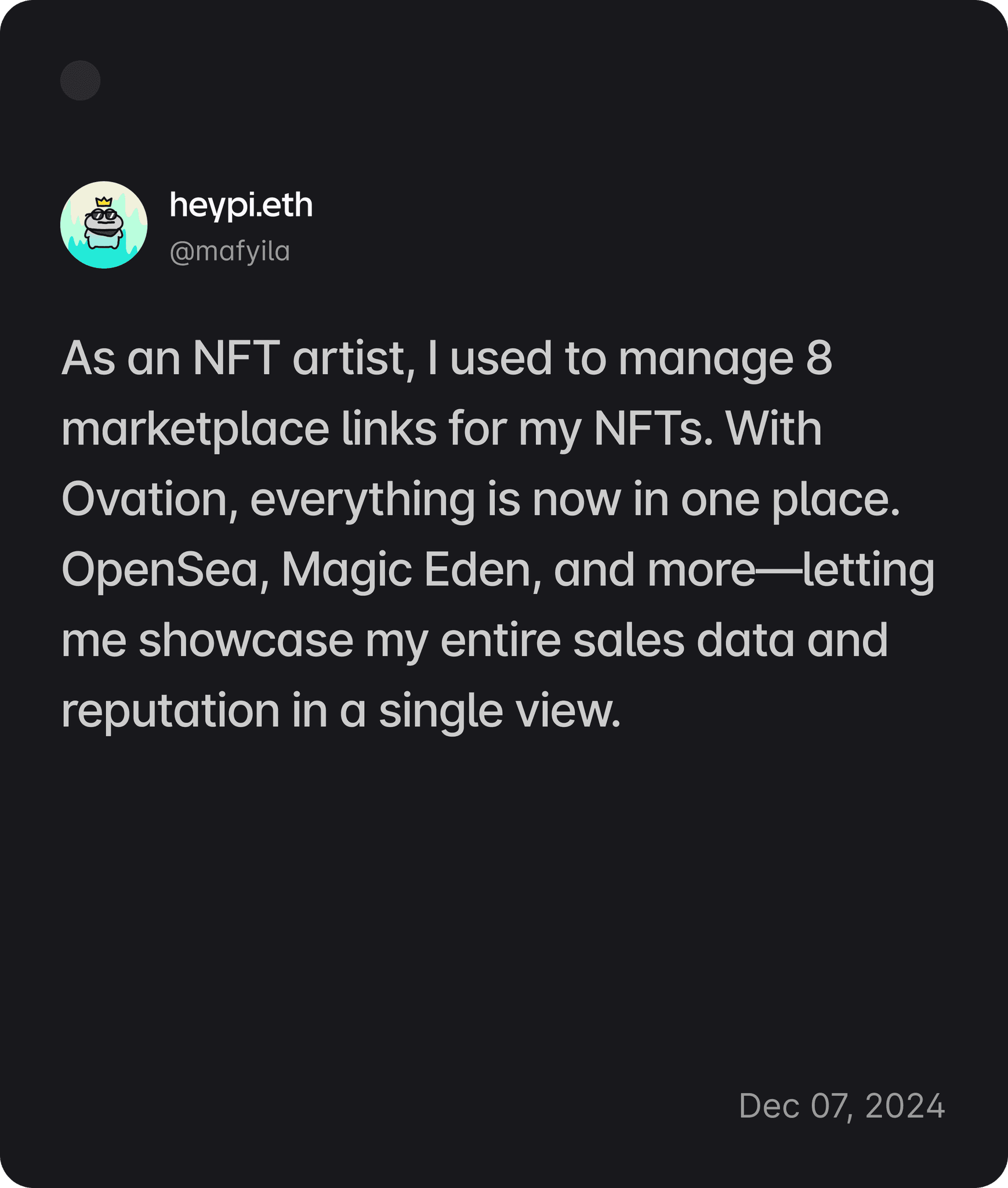
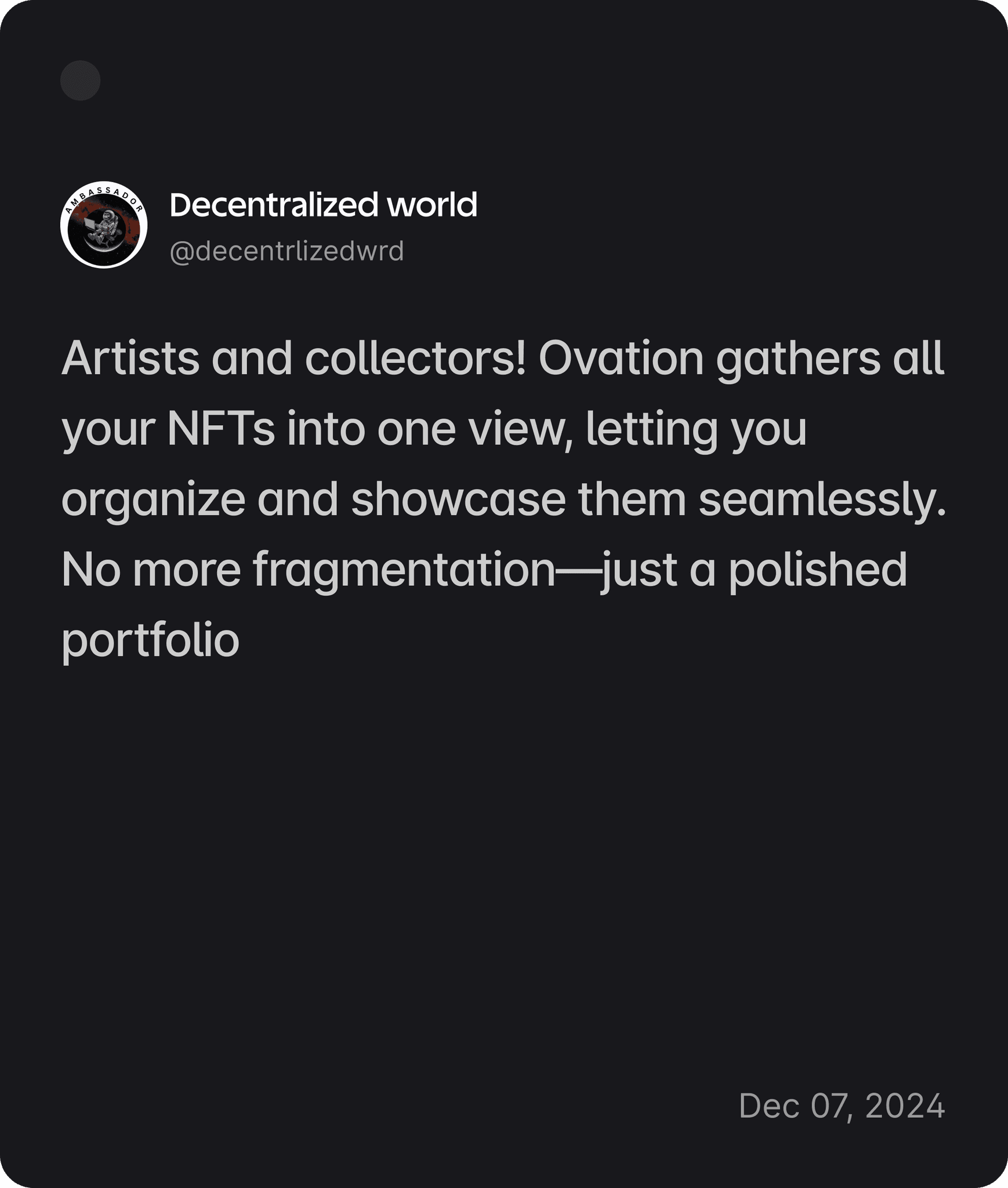
And when we launched the redesigned landing site, the storytelling around identity resonated so strongly that we received 700+ waitlist signups in the first weeks, proving that people weren’t just looking for portfolio viewers, they were searching for selfhood.




Rollout — From Experiment to Identity
The rollout of Ovation was not a loud launch or a promotional blast—it was a gradual unfolding, shaped intentionally to match the emotional nature of the product. I began with a controlled invitation phase, reaching out first to the NFT collectors, digital artists, and Web3 community members who had participated in our early interviews. These were the individuals who had expressed not just interest, but a deep longing for a place where their identity in Web3 could breathe. We invited them to create their profiles, to curate, to experiment, to ask questions, and to tell us how it felt. The rollout became an extension of the research itself: a dialogue, not a release. And what was once simply a prototype for “a better way to show NFTs” slowly evolved into a place where people recognized themselves.
As users began personalizing their profiles, selecting which NFTs represented them, choosing which to hide, arranging visual hierarchy in ways that expressed their taste and personality, Ovation saw identity taking form in real time. The platform was no longer a tool; it became a surface for self-expression. We watched as users pinned meaningful pieces to the front of their profiles: the first NFT they ever collected, an artwork from a friend, a token tied to a memory. We watched as community members shared their profiles not to impress, but to say, “This is me. This is where I’ve been. This is what I care about.” In this way, rollout was not simply adoption, it was embodiment. The product became lived rather than used.
Word spread organically, not because we asked people to share, but because the platform itself felt like something worth sharing. Communities introduced it to communities. Artists shared it with collectors. Collectors shared it with their circles. And industry leaders, individuals who had seen countless NFT platforms come and go—recognized that this one was different. It didn’t shout innovation. It whispered belonging. And sometimes, that is the louder statement.
Ovation started as an experiment in expression. It rolled out as a space for identity. And that shift, from function to meaning, is what defined its place in the ecosystem.
Announcement video
What I Learned
Identity cannot be imposed, extracted, or assumed.
Identity must be invited, expressed, and chosen.
Design in Web3 is not about displaying assets, it is about honoring meaning.
And if we want digital spaces to feel human, we must design them like mirrors, not windows.





Closing Thoughts
Looking back at this project, what stands out to me is not the screens, the flows, or even the system architecture, but the clarity of intention that shaped every decision. Ovation was never meant to be just another Web3 tool or a more aesthetic wallet explorer. It was built to make people feel seen in a digital space where identity often collapses into ownership data and transaction logs. Designing Ovation meant constantly asking what it means to express oneself, what it means to be understood, and how technology can support that without reducing or distorting it. It challenged me to design interfaces that do not shout but invite; systems that do not dictate but allow; experiences that do not impress but resonate.
The product reminded me that great design doesn’t just solve problems, it gives people language for things they’ve always felt but never had a place to express. I learned how deeply identity is intertwined with choice, how meaning emerges not from what we display but from what we decide not to show. I learned that accessibility in emerging technology is not just about contrast ratios and touch targets, but emotional accessibility, clarity, softness, kindness in the interface. And I learned how powerful it is to design with a team that listens, questions, challenges, and builds with intention.
Ovation grew into something larger than the product we sketched on Figma frames. It became a mirror for the people who used it, a place where they could organize, curate, and narrate their presence on the blockchain in a way that felt personal. And in that sense, it wasn’t just about designing for the Web3 industry, but designing for the human beings who are shaping it. If there is anything I carry forward from this experience, it is that identity is emotional, and any product that claims to represent identity must move with care, respect, and empathy.
This project reminded me why I design: not just to create interfaces people use, but to build spaces where they feel understood.